
Vascular Ultrasound Services
What the Service Involves
Vascular ultrasound uses high-frequency sound waves to create images of blood vessels and measure the speed and direction of blood flow. Depending on the area of concern, different types of ultrasounds are used, including:
- Carotid Ultrasound: Assesses the blood flow through the carotid arteries in the neck and can help predict stroke risk.
- Abdominal Aorta Ultrasound: Examines the abdominal aorta and checks for aneurysms or other abnormalities.
- Renal Ultrasound: Evaluates the arteries supplying the kidneys to detect stenosis or other issues affecting kidney function.
- Peripheral Arterial Vascular Ultrasound: Examines the blood flow through the arteries of the legs and the arms to diagnosis peripheral vascular disease.
- Venous Reflux Study and Extremity Ultrasound: Looks at the veins in the legs or arms to assess for deep vein thrombosis or chronic venous insufficiency.
Preparation
Patients typically do not need any special preparation for most vascular ultrasounds. Specific instructions may be provided if the area being examined requires fasting or other pre-test measures.
During the Test
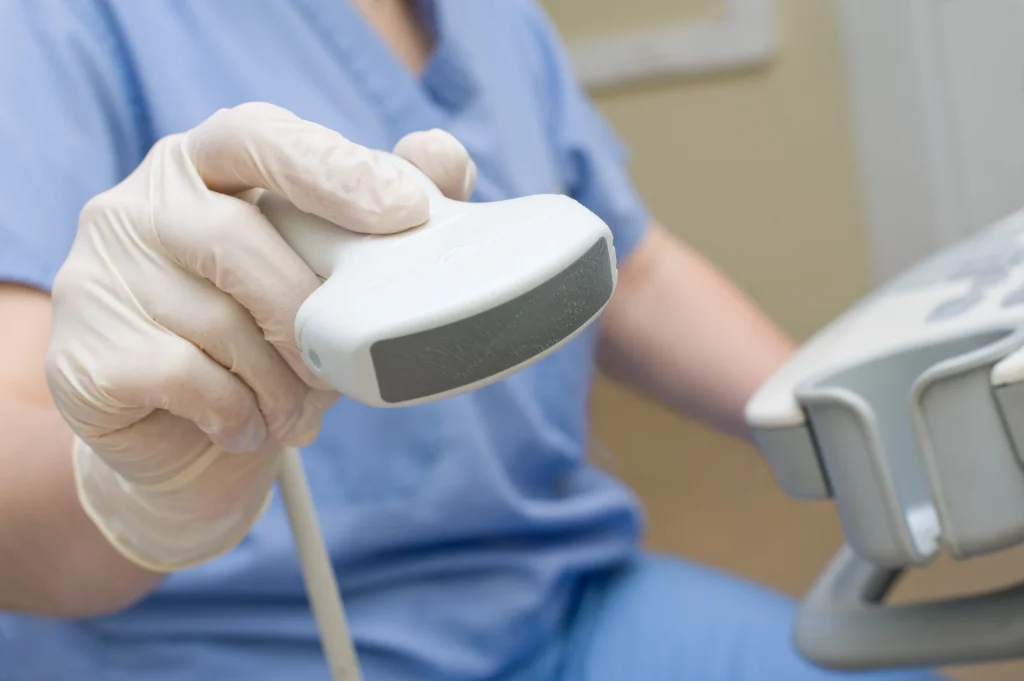
The test is painless and usually takes 30 to 60 minutes. A technician applies a gel on the skin over the examination area and then moves a small device called a transducer over the skin to capture the images.
Benefits
Vascular ultrasound is crucial for early detection of vascular diseases, helping to prevent conditions like strokes, heart attacks, and aneurysms. It provides a clear picture of how effectively blood is flowing through the vessels and identifies any blockages or abnormalities.
